Cleaning up after a sewage backup starts with stopping all water use and putting on boots, gloves and eye protection. A small backup on a hard floor can be handled in 7 steps, from extraction to measured drying, while carpet, padding and soaked drywall must be thrown out rather than cleaned. Bathrooms, basements and crawl spaces change where the sewage collects, not the method. Once sewage has soaked into walls or subfloor, or spread past one room, the job is too big to do yourself.
What Do You Need Before Cleaning Up a Sewage Backup?
Before cleaning up a sewage backup, you need rubber boots, waterproof gloves and eye protection, a stopped water supply and a dry path to the electrical panel. Stop all water use first. Every flush, shower or load of laundry pushes more sewage up through the lowest drain while the line is blocked.
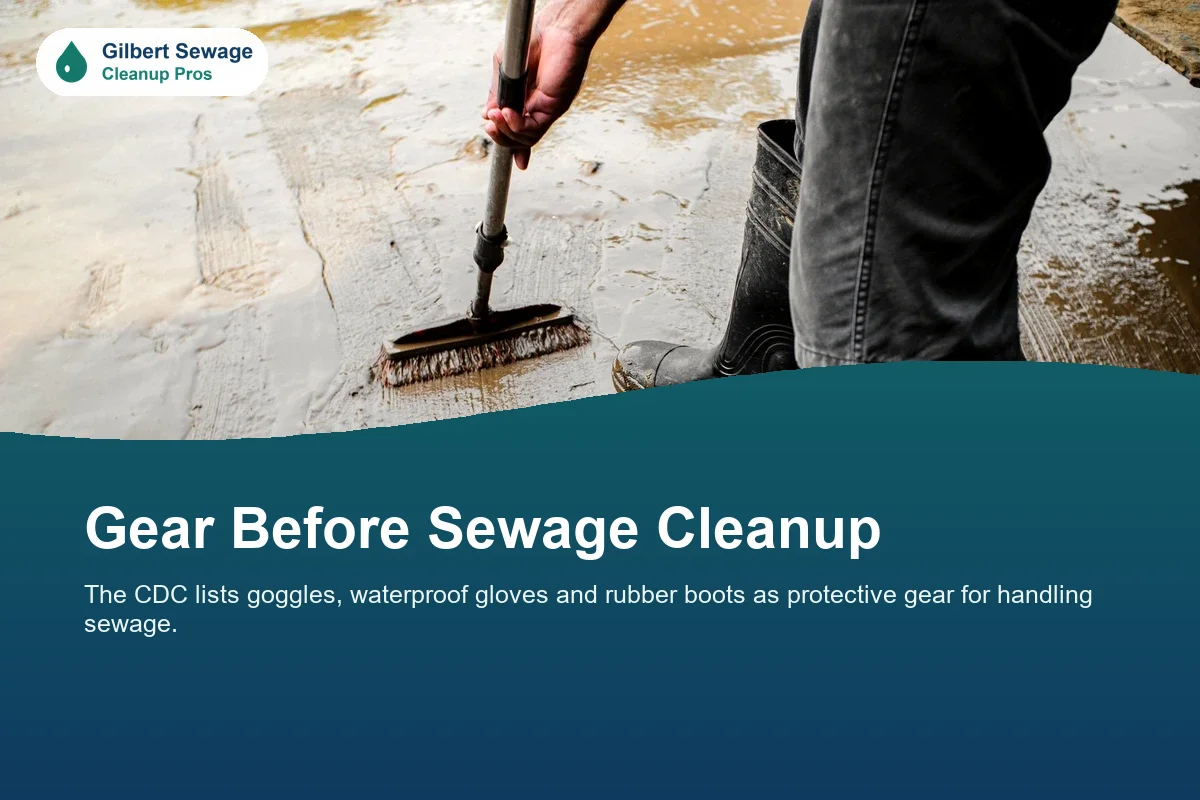
The gear for a small sewage backup cleanup is a short list of items most hardware stores stock:
- Rubber boots
- Waterproof gloves
- Goggles or a splash-proof face shield
- N95 respirator mask
- Long sleeves and long pants you can wash separately or throw away
- Heavy-duty trash bags
The CDC lists goggles, a face shield, waterproof gloves and rubber boots as the protective gear for anyone handling sewage (CDC). Keep the gear on until every contaminated surface is disinfected.
What protective gear does sewage cleanup require?
Sewage cleanup requires rubber boots, waterproof gloves, eye protection and an N95 mask at minimum. The Arkansas Department of Health adds the N95 mask for removal work, because scrubbing and cutting throw contaminated droplets into the air (Arkansas Department of Health, 2023). Cover any cuts first: broken skin is the easiest way for sewage germs to enter your body.
Should you turn off the water and power first?
Yes, stop water use first and cut power to the wet area before you step in. Seattle Public Utilities warns against using electrical equipment while standing in water and advises unplugging every appliance in the flooded area (Seattle Public Utilities). If the panel sits in the wet area, leave the breakers alone and call an electrician.
The 7 Steps to Clean Up a Small Sewage Backup
The 7 steps to clean up a small sewage backup are to stop water use, ventilate, extract standing sewage, bag solids and soaked porous items, scrub hard surfaces with detergent, disinfect, and dry the area completely. These steps fit one room with a hard floor, such as a tiled bathroom or laundry room.
- Stop all water use in the house until the blockage is cleared.
- Open windows and run a fan pointed outdoors to ventilate the room.
- Extract standing sewage with a wet/dry shop vac, then disinfect the vac tank and hose.
- Bag solids, rags and soaked porous items in heavy-duty bags and seal them.
- Scrub every hard surface with hot water and detergent to lift the residue.
- Disinfect with ¼ cup of 5.25% household bleach per gallon of water, and never mix bleach with ammonia (Arkansas Department of Health, 2023).
- Dry the room with fans and a dehumidifier, then confirm dryness with moisture readings.
Detergent comes before bleach because disinfectant cannot reach germs under a film of residue. Wet materials need to be dried within 24-48 hours to keep mold from starting (EPA). Dry to the touch is not dry: a moisture meter shows water still held in grout, baseboards and the bottom of drywall.
Which Materials Can Be Cleaned and Which Must Be Thrown Out?
Hard, non-porous materials such as tile, sealed concrete and metal can be cleaned and disinfected, while carpet, padding, mattresses and soaked drywall must be thrown out. The IICRC S500 water damage standard classes sewage as Category 3 water and calls for removing porous materials it soaks into. Photograph everything before it goes in a bag.
| Material | Clean or discard | Why |
|---|---|---|
| Ceramic or porcelain tile | Clean | Non-porous surface; scrub and disinfect the grout too |
| Sealed concrete | Clean | Sealer keeps sewage on the surface |
| Metal and glass | Clean | Non-porous; disinfectant reaches every surface |
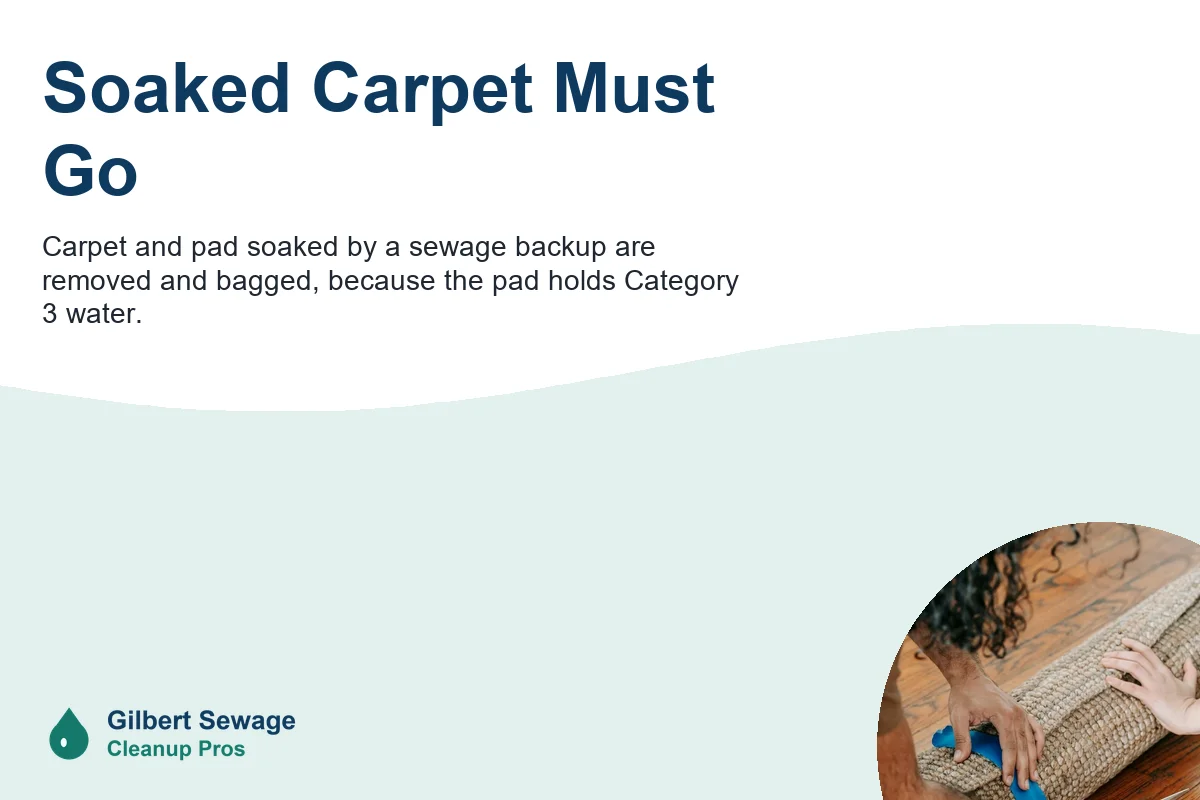
| Carpet and pad | Discard | Pad absorbs sewage and cannot be disinfected |
| Drywall soaked by sewage | Discard | Paper face and gypsum core hold contamination |
| Upholstered furniture and mattresses | Discard | Foam and fabric absorb sewage through the core |
| Solid wood furniture | Clean if surface-wet only | Sealed solid wood can be scrubbed; soaked particleboard cannot |
The rule behind the table is absorption. Anything that soaked up sewage keeps it inside, where bleach cannot reach.
Can carpet be saved after a sewage backup?
No, carpet and pad touched by sewage are removed and replaced. The pad soaks up Category 3 water like a sponge, and the carpet backing holds it against the floor (IICRC S500). Small area rugs follow the same rule.
Is drywall safe to keep after sewage contact?
No, drywall that sewage wicked into is cut out and replaced. Seattle Public Utilities advises sanitizing or removing wallboard within 24 hours of a backup (Seattle Public Utilities). Cleanup crews cut the wall at least a foot above the highest wet reading, not at the visible stain.
Cleaning a Backup by Room: Bathroom, Basement and Crawl Space
Room-by-room cleanup changes where sewage collects, not the method: bathrooms collect it around the toilet and tub, while basements and crawl spaces collect it at the lowest point. The 7 steps stay the same in every room. What changes is the hidden spot you check last.
How do you clean sewage from a bathroom floor?
To clean sewage from a bathroom floor, you extract the liquid, then scrub and disinfect the floor, the toilet base, the tub and the shower drain. Pull the baseboards near the toilet, because sewage runs under them and into the wall. A toilet overflow cleanup that skips the toilet base and the vanity kick plate leaves wet, contaminated material behind.
Do Gilbert homes have basements or crawl spaces?
No, most Gilbert homes are built slab-on-grade, so basements and crawl spaces are uncommon. In a slab home, sewage spreads across the floor and wicks into the bottom of walls instead of pooling below the house. In a home that does have a basement, sewage collects at the floor drain and needs pumping before the 7 steps begin.
When a Sewage Backup Is Too Big to Clean Yourself
A sewage backup is too big for DIY cleanup when sewage has soaked into drywall, carpet or subfloor, spread beyond one room, or sat for more than a day. The EPA advises hiring a professional with experience in contaminated-water damage once sewage is involved beyond a small, hard-surface spill (EPA).
These 5 conditions mark the point where DIY cleanup stops:
- Sewage in carpet, pad or drywall
- Sewage across more than one room
- Water under flooring or in the subfloor
- Sewage left standing for more than 24 hours
- A household member who is pregnant, elderly or immunocompromised
Any one of these means the contamination has reached places a shop vac and bleach cannot clean. Crews that handle sewage cleanup in Gilbert remove the wet materials, dry the structure and document every moisture reading for the insurer.
Why Sewage Cleanup Is a Health Job, Not Just a Mess
Sewage cleanup protects your health first and your floors second. The germs in a backup cause illness long after the smell is gone, which is why the gear and the disinfecting step matter. The health risks of sewage exposure explain which illnesses come from a backup and who is most at risk.
What Illnesses Can Come From a Sewage Backup?
A sewage backup can cause gastrointestinal illness, skin infections and eye infections through hand-to-mouth contact or broken skin. The Arkansas Department of Health notes that sewer water can carry bacteria, viruses and other organisms that cause disease (Arkansas Department of Health, 2023).
Most illness shows up as diarrhea, cramps and vomiting a day or more after cleanup. Wash your hands after every break and before eating, and launder cleanup clothes separately from the rest of the household’s laundry.