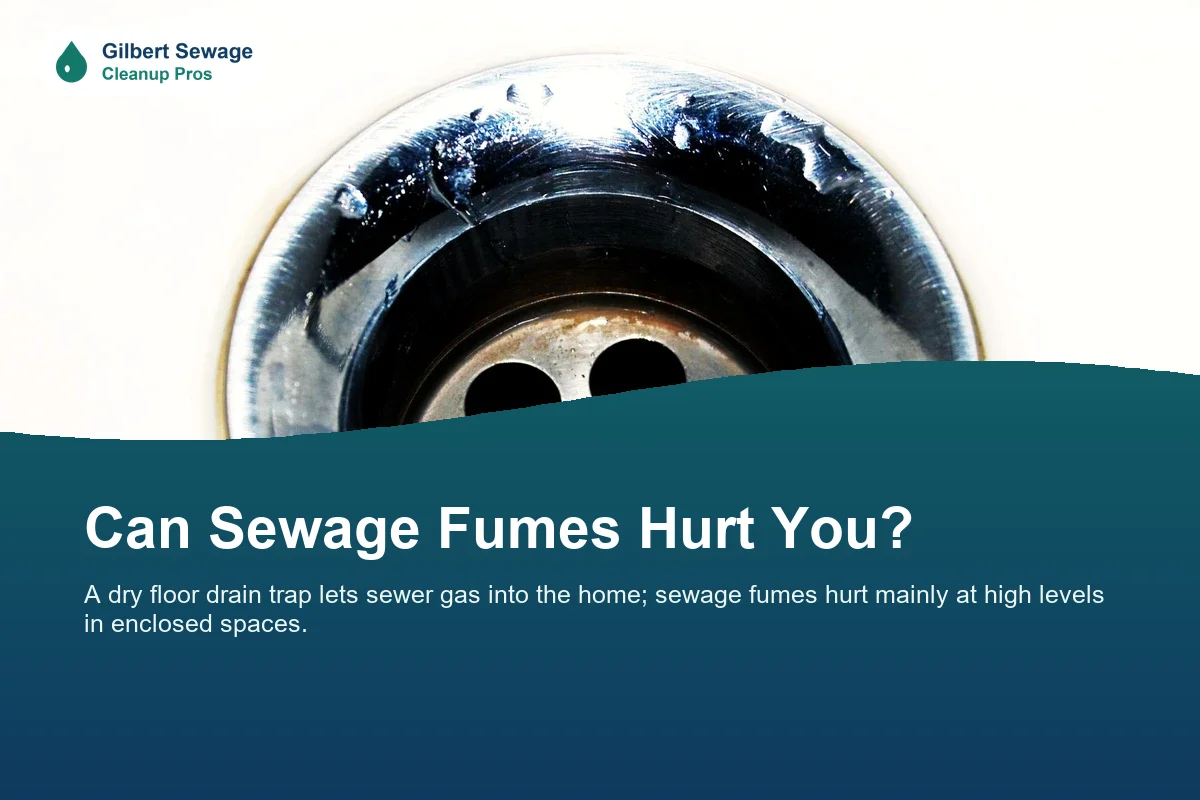
Sewage fumes can hurt you mainly at high concentrations in enclosed spaces, while the low levels found in most homes cause irritation, headaches and nausea. Sewer gas is a mix of hydrogen sulfide, methane, ammonia and carbon dioxide, and its rotten-egg smell can fade at dangerous levels. Most household sewer gas comes from a dried-out trap, a blocked vent, a failed toilet seal or a cracked pipe.
What Is Sewer Gas Made Of?
Sewer gas is a mix of hydrogen sulfide, methane, ammonia and carbon dioxide produced as waste breaks down in pipes and tanks. Bacteria break down waste without oxygen, and these gases are the by-products.
The 4 main gases in sewer gas each bring a different risk:
- Hydrogen sulfide: the rotten-egg smell; irritating at low levels and toxic at high levels
- Methane: odorless and flammable at high concentrations
- Ammonia: sharp smell; irritates the eyes, nose and throat
- Carbon dioxide: odorless; displaces oxygen in closed spaces
Hydrogen sulfide drives most of the health risk at home. People notice it at very low levels: OSHA puts the odor threshold between 0.01 and 1.5 parts per million (ppm) (OSHA).
Methane and carbon dioxide have no smell, so a strong odor tells you hydrogen sulfide is present but not how much of the other gases is there.
Is Sewer Gas Dangerous at the Levels Found in Homes?
Sewer gas at the low levels found in most homes causes irritation and headaches rather than serious harm, but high concentrations in enclosed spaces can be dangerous. OSHA links 2 to 5 ppm of hydrogen sulfide to headaches, nausea and watery eyes over longer exposure (OSHA). A dry trap in a bathroom does not produce the concentrations found in sewers, septic tanks or pits.
The danger level is 100 ppm. NIOSH lists 100 ppm of hydrogen sulfide as immediately dangerous to life or health (NIOSH). Septic tanks, sewer manholes and lift-station pits can reach that level, so entering them is work for trained professionals with gas monitors and breathing equipment.
For homeowners, the practical rule is simple. Never climb into a septic tank, manhole or sewer pit, even briefly, and never send someone in after a person who collapsed there.
Why is losing the smell a warning sign?
Losing the smell is a warning sign because hydrogen sulfide numbs the sense of smell at high concentrations. OSHA reports loss of smell within 2 to 15 minutes at 100 ppm (OSHA), and CDC medical guidance warns that smell is not a reliable alarm above that level (ATSDR). A rotten-egg smell that suddenly fades in an enclosed space means leave now, not that the gas is gone.
What Are the Symptoms of Sewer Gas Exposure?
The symptoms of sewer gas exposure are headache, nausea, dizziness, eye irritation and coughing, and they usually ease once you reach fresh air. OSHA lists these effects for low and moderate hydrogen sulfide levels (OSHA).
- Headache
- Nausea
- Dizziness
- Eye irritation
- Coughing or throat irritation
- Poor sleep and fatigue with repeated exposure
Symptoms that fade outdoors and return inside point to a gas source in the house. See a doctor if symptoms continue after you leave the building, or if anyone has trouble breathing.
Who is most sensitive to sewer gas?
People with asthma are most sensitive to sewer gas. OSHA notes that some asthma patients can have airway constriction at 2 to 5 ppm of hydrogen sulfide (OSHA). Young children, older adults and people with lung or heart conditions should stay out of a room with a strong sewer smell until it is ventilated.
Why Does a House Smell Like Sewer Gas?
A house smells like sewer gas because a trap has dried out, a vent is blocked, a toilet seal has failed or a pipe is cracked. Each fault opens a path from the sewer line into the living space.
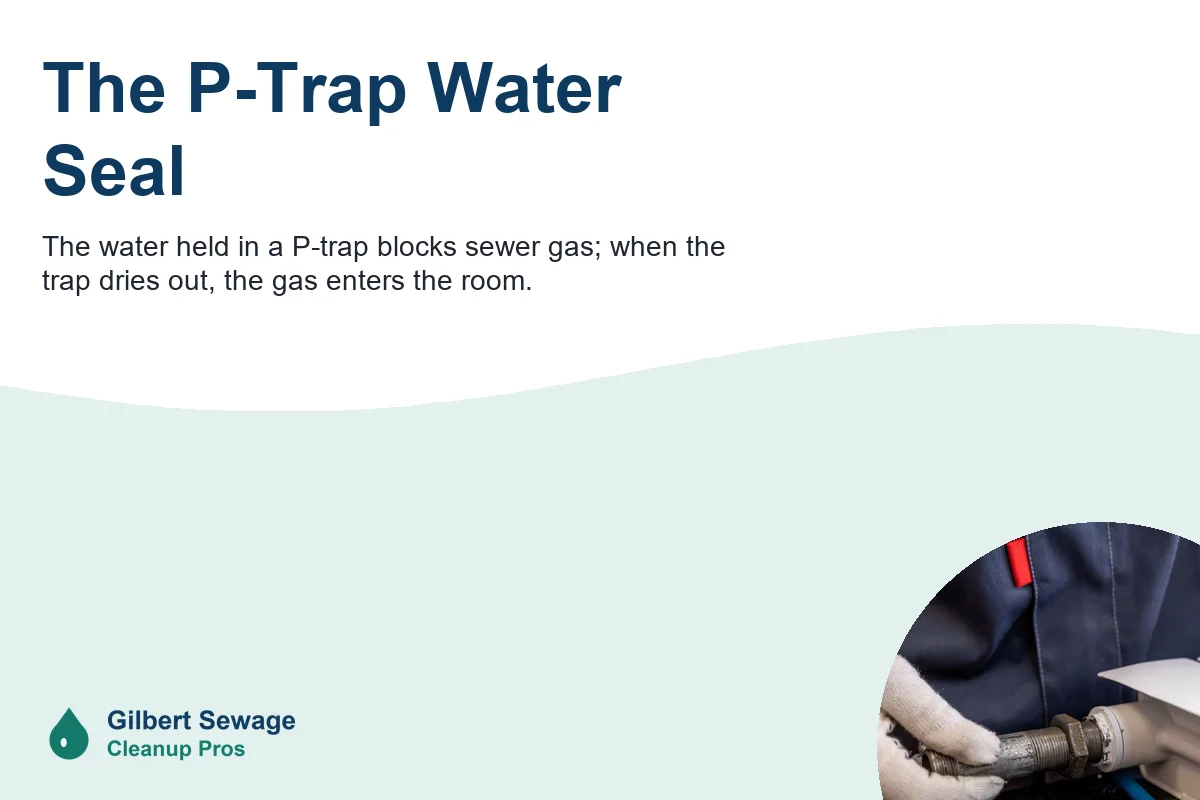
- Dry P-trap: the water seal under a drain evaporates when the drain goes unused
- Blocked plumbing vent: debris in the roof vent lets drains siphon their traps dry
- Failed wax ring: the seal under a toilet leaks gas at the floor
- Cracked drain pipe: a break under the slab or in a wall leaks gas into the room
A smell that stays after these are checked can mean contaminated material is still in the building. That points to a sewage smell that won’t go away rather than a gas leak.
To find the source, go fixture by fixture. Check unused floor drains, guest bathroom sinks and showers, then the base of each toilet, and note where the smell is strongest. A smell along a wall with no fixture points to a cracked pipe or vent inside the wall, which a plumber can locate with a smoke test.
Can a dry floor drain let sewer gas in?
Yes, a dry floor drain lets sewer gas straight into the room, because the water in its trap is the only barrier. Garage and laundry room floor drains in Gilbert homes often go months without use, and the dry desert air speeds evaporation. Pour water into each rarely used drain on a regular schedule to keep the seal.
When a Sewage Smell Means More Than Gas
A sewer gas smell and a post-backup smell come from different places. Gas leaks through plumbing faults; a smell after a backup usually comes from contaminated material left behind. Sewage odor after a cleanup is a cleanup problem, not a plumbing one.
Is a Sewage Smell After a Backup a Gas Problem?
A sewage smell that stays after a backup usually comes from contaminated material left in the building, not from gas in the pipes. Wet drywall, padding and subfloor hold sewage residue and keep releasing odor as it decomposes.
The test is location. A smell strongest at a drain points to plumbing, while a smell strongest at a wall, baseboard or floor in the backup room points to material that was never removed.