Sewage cleanup fails when the source isn’t stopped, soaked porous materials are kept, or drying is judged by touch. Surfaces dry first while wall cavities and subfloor stay wet, and Category 3 contamination stays inside porous materials even after disinfection. A cleanup was done right when moisture readings match unaffected areas, no odor remains and removed materials are documented.
The 7 Mistakes That Make a Sewage Cleanup Fail
The 7 mistakes that make a sewage cleanup fail are cleaning before stopping the source, keeping soaked porous materials, using household tools, mixing chemicals, disinfecting without cleaning first, drying by touch, and skipping documentation. Each one either leaves contamination behind or creates a new hazard.
-
Cleaning before stopping the source. Every flush and shower pushes more sewage onto the floor you just cleaned. Stop all water use and have the line cleared first.
-
Keeping soaked porous materials. Carpet pad, drywall and insulation hold sewage inside where disinfectant cannot reach. Cut them out and bag them.
-
Using household tools. A household vacuum sprays contaminated droplets and a reusable mop spreads sewage to clean floors. Use a wet/dry shop vac and disposable rags.
-
Mixing chemicals. Bleach mixed with ammonia releases a toxic gas that can be deadly (Arkansas Department of Health, 2023). Use one product at a time and rinse between them.
-
Disinfecting without cleaning first. Disinfectant applied over residue kills only the top layer of germs. Scrub with detergent, rinse, then disinfect.
-
Drying by touch. A surface can feel dry while the wall cavity behind it is still wet. Confirm dryness with moisture readings.
-
Skipping documentation. Missing photos and receipts weaken an insurance claim. Photograph everything before it is removed and keep every receipt.
Mistakes 2 and 6 cause most repeat problems. Both leave something wet or contaminated behind a surface that looks finished.
Mistake 7 causes the most expensive surprise. Without photos and receipts, an insurer can question both the extent of the damage and what the cleanup actually removed.
Why Drying by Touch Leaves Hidden Moisture
Drying by touch leaves hidden moisture because surfaces dry first while wall cavities, subfloor and the backs of baseboards stay wet. Paint and tile release moisture to the room quickly. The gypsum, framing and slab underneath release it slowly, sealed off from the air.
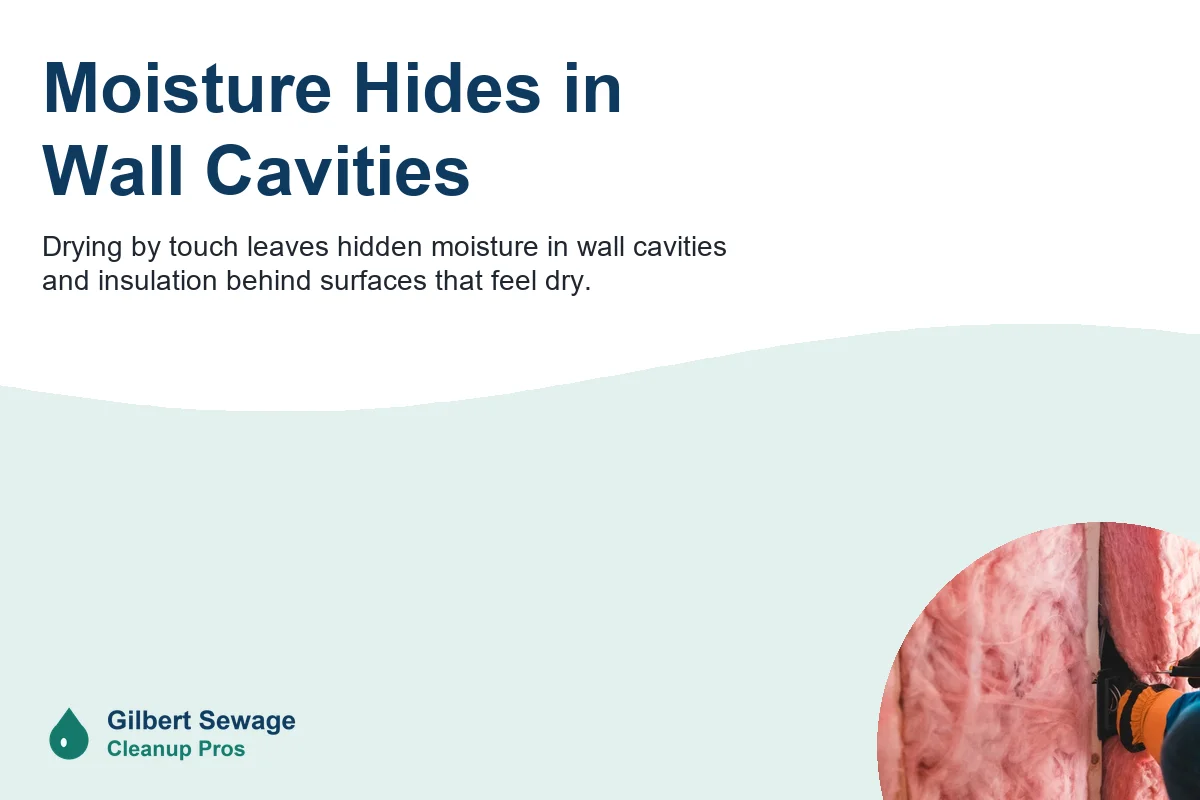
The EPA advises drying wet materials within 24-48 hours to prevent mold growth (EPA). A wall that feels dry on day 2 but reads wet at its base will grow mold inside the cavity. Moisture meters and drying equipment measure what touch cannot.
How long should drying take after a sewage backup?
Drying takes as long as it takes for readings to match the dry standard, which is usually several days. A schedule set in advance is a guess; the moisture log is the measurement. Equipment that leaves before the readings match leaves water behind.
Why Keeping Soaked Drywall and Carpet Backfires
Keeping soaked drywall and carpet backfires because Category 3 contamination stays inside porous materials even after the surface is disinfected. The IICRC S500 standard classes sewage as Category 3 water and calls for removing the porous materials it contaminates.
The surface may look and smell clean for a week. Then the trapped residue decomposes, the odor returns and mold starts in the same material, and the job has to be done twice.
Can carpet be cleaned instead of replaced after sewage?
No, carpet and pad soaked by sewage are replaced, not cleaned. The pad holds Category 3 water through its full depth, and the carpet backing traps it against the floor (IICRC S500). Steam cleaning the surface leaves the contamination underneath.
Why Fixing the Cause Comes Before the Cleanup
Fixing the cause comes first because an uncleared blockage sends sewage back up the next time water runs. A cleanup done over an open blockage is a cleanup you pay for twice.
A plumber clears the line through the cleanout and runs a camera inspection to find the cause. Roots, a cracked pipe, a belly in the line or a buildup of grease each need a different repair. The camera footage also documents the cause for an insurance claim.
What does a sewer camera inspection show?
A sewer camera inspection shows the cause and location of the blockage, such as roots, a crack, a collapsed section or a low spot that holds waste. The plumber feeds a camera through the cleanout and records the line. The recording tells you whether the fix is a cleaning, a spot repair or a line replacement.
How Do You Know a Sewage Cleanup Was Done Right?
You know a sewage cleanup was done right when moisture readings match unaffected areas, no odor remains and the removed materials are documented. These 6 records and conditions confirm a finished job:
- Moisture log: daily readings showing affected materials reached the dry standard
- Dry standard: a reading from an unaffected material in the same home
- Odor check: no sewage or musty smell, including inside closets and cabinets
- Removal record: photos and a list of every material cut out and disposed of
- Source repair: a plumber’s invoice or camera report showing the cause was fixed
- Disinfection record: the product used and the surfaces treated
A company that cannot produce a moisture log has not proven the structure is dry. Ask for these records before the equipment leaves.
Keep these records with your insurance file and your home records. They answer a buyer’s or inspector’s questions years later, when the backup is long forgotten.
What Happens When Mistakes Lead to Mold
Most cleanup mistakes end in the same place: a wet material left behind a finished surface. Mold is the delayed result. Mold after an incomplete cleanup shows where it starts and how it is removed.
Can an Incomplete Cleanup Cause Mold Later?
Yes, an incomplete cleanup can cause mold weeks later in the materials left wet behind finished surfaces. The first sign is usually a musty smell rather than a visible spot.
Mold inside a wall grows on the back face of the drywall, out of sight. By the time it shows through paint, the cavity behind it is already affected.
Opening the wall and drying it is the fix, followed by removing the affected drywall and insulation. Catching it early keeps the repair to the bottom of the wall instead of the full height.