Cleaning up a sewage spill outdoors starts with blocking its path to storm drains and keeping children and pets away. Solids are removed, soil is treated with garden lime and hard surfaces such as concrete are disinfected, in 5 steps. Raw sewage can kill grass and garden plants, and produce it touched should be thrown away. A spill in the yard often points to a broken line that can also push sewage back into the home.
How Do You Contain an Outdoor Sewage Spill?
To contain an outdoor sewage spill, you block its path with dirt, sandbags or a plastic tarp and keep it out of storm drains. Build the barrier on the downhill side first, between the spill and the street. Stop all water use indoors so the line stops feeding the spill.
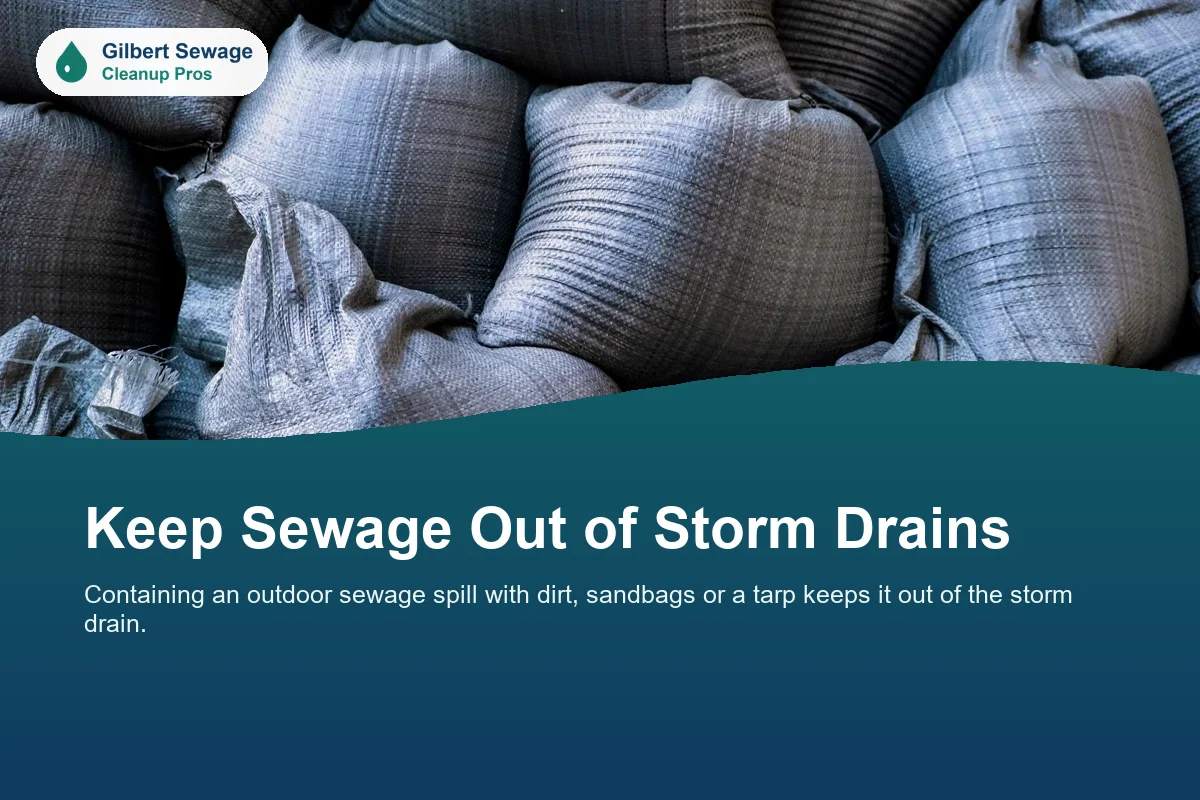
Gilbert yards are mostly flat with gravel or turf, so sewage spreads wide and shallow rather than running far. A low berm of dirt around the edge holds it in place. Crews that handle raw sewage cleanup in yards and on patios start with the same barrier.
Should you hose sewage into the street drain?
No, storm drains carry runoff away untreated, so sewage hosed into the street skips the treatment plant entirely. Hosing also spreads the spill across more ground. Keep the water off until the solids are gone.
The 5 Steps to Clean Sewage From a Yard or Patio
The 5 steps to clean sewage from a yard or patio are to protect yourself, contain the spill, remove solids, treat soil or hard surfaces, and wash and dispose of gear. Lime treats soil; bleach treats concrete. The two are never swapped.
- Protect yourself with rubber boots, waterproof gloves and eye protection, and keep children and pets indoors.
- Contain the spill with dirt, sandbags or a tarp on the downhill side.
- Remove solids with a shovel and bag them in heavy-duty disposal bags.
- Treat soil with garden lime until the surface looks mostly white, and scrub concrete with detergent, then the bleach solution.
- Wash tools and boots with detergent and bleach, bag disposable gear, and shower.
Florida Department of Health county guidance applies lime to outdoor spills only, rakes up the thick residue after about a day, and waters the rest into the soil (Florida Department of Health). Yolo County Environmental Health warns that lime is highly corrosive to aluminum, so bleach is used where aluminum is present (Yolo County Environmental Health). Follow the lime label’s protective gear instructions, because hydrated lime burns skin and eyes.
Can Sewage Kill Grass and Garden Plants?
Yes, raw sewage and the chemicals used to treat it can kill grass and plants, and the soil can stay contaminated until sunlight, drying and time break down the pathogens. Lime raises soil pH sharply, which kills germs and can also burn roots. Expect to reseed or replant a treated patch.
Gilbert’s strong sun and low humidity dry a spill faster than in wetter climates. Drying does not make the area safe on its own, so the area stays off-limits until it is treated.
Is it safe to eat vegetables after a sewage spill?
No, throw away fruit and vegetables that sewage touched. The Arkansas Department of Health advises discarding food exposed to contaminated water (Arkansas Department of Health, 2023). Washing does not remove germs from leafy greens or from produce with a rough skin.
When Outdoor Sewage Means an Indoor Problem Too
Sewage in the yard and sewage in the house usually share one cause. When the line outside is blocked, the lowest drain indoors is the next place sewage appears. Check your floor drains and tubs, and if sewage reached the floor, follow the steps for cleaning up a sewage backup indoors.
What Does a Yard Spill Say About the Sewer Line?
Sewage surfacing in a yard usually signals a broken line or an overflowing cleanout, which can also push sewage back into the home. A cleanout is the capped pipe in the yard that gives plumbers access to the line. Sewage at the cleanout means the blockage sits further down the line.
A soggy patch with a sewage smell and no visible pipe points to a cracked line underground. For county-island homes on septic, the same signs point to a full tank or a failing drain field. A plumber’s camera inspection finds the break before the next backup reaches the house.